

In Bristol and across the South West, the restoration of brickwork, timber beams, stone masonry, steelwork and architectural features often starts with abrasive blasting. People usually call it “sandblasting”, but that label hides a key truth: blasting isn’t one technique — it’s a family of methods, and the wrong choice can do more harm than good.
Bristol’s building stock is a mixed bag: Victorian red brick terraces, Georgian and period façades, older stonework, industrial waterfront structures, and plenty of painted timber features. Add a damp climate and (in some areas) exposure to salty air around the harbour and Avon estuary, and you’ve got surfaces that weather fast — and coatings that fail in messy ways. Getting a clean, damage-free finish means picking the right blasting method, media and pressure for the substrate, not just “blasting it harder”.
Below, we break down three widely used approaches — sandblasting (mineral-media blasting), shot blasting, and soda blasting — what they do, when each makes sense, and which surfaces they’re best suited to around Bristol.
What Is Abrasive Blasting?
Abrasive blasting is any process that propels solid particles (abrasive media) at speed against a surface to clean, strip, etch, or profile it. The “abrasive” might be mineral media, steel shot, glass bead, baking soda, or other specialist materials — and the results depend on far more than the media itself.
To do it properly, you need to control:
- Media type and grade (how aggressive it is)
- Pressure and flow rate (how hard it hits)
- Nozzle size/shape and distance (how focused the blast is)
- Angle of attack (how much it cuts vs cleans)
- Containment and dust control (how clean the site stays)
- Test patches (proof before committing)
In a city like Bristol — where you’ll find everything from robust brick to softer, weathered stone and delicate interior timber — that control is the difference between a clean restoration and a permanently scarred surface.
Sandblasting
What It Is & How It Works
Strictly speaking, “sandblasting” means blasting with silica sand. In modern professional use, the term is often used more loosely to describe abrasive blasting with mineral or angular media.
The media is accelerated with compressed air (and sometimes water, in wet blasting setups) and directed through a nozzle at the target surface. Because many mineral abrasives are angular and hard, this method can be highly effective — and equally unforgiving if overdone.
When to Use It
Sand/mineral-media blasting is a strong choice when you need real cutting action, such as:
- Removing heavy paint layers from brick, timber, metal, or masonry
- Stripping thick varnish or stubborn coatings from wood (with care)
- Removing corrosion, scale and old coatings from steel and iron
- Surface preparation where you need a clean, keyed finish for new coatings
Suitable Surfaces
Used correctly, it can be effective on:
- Brickwork and masonry: Removing paint, soot, grime, or unwanted coatings to reveal the original face of the brick. Precision and restraint matter — mortar joints and softer bricks can be vulnerable.
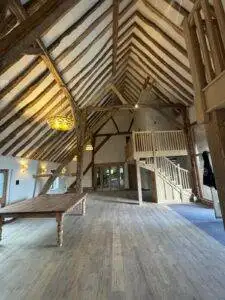
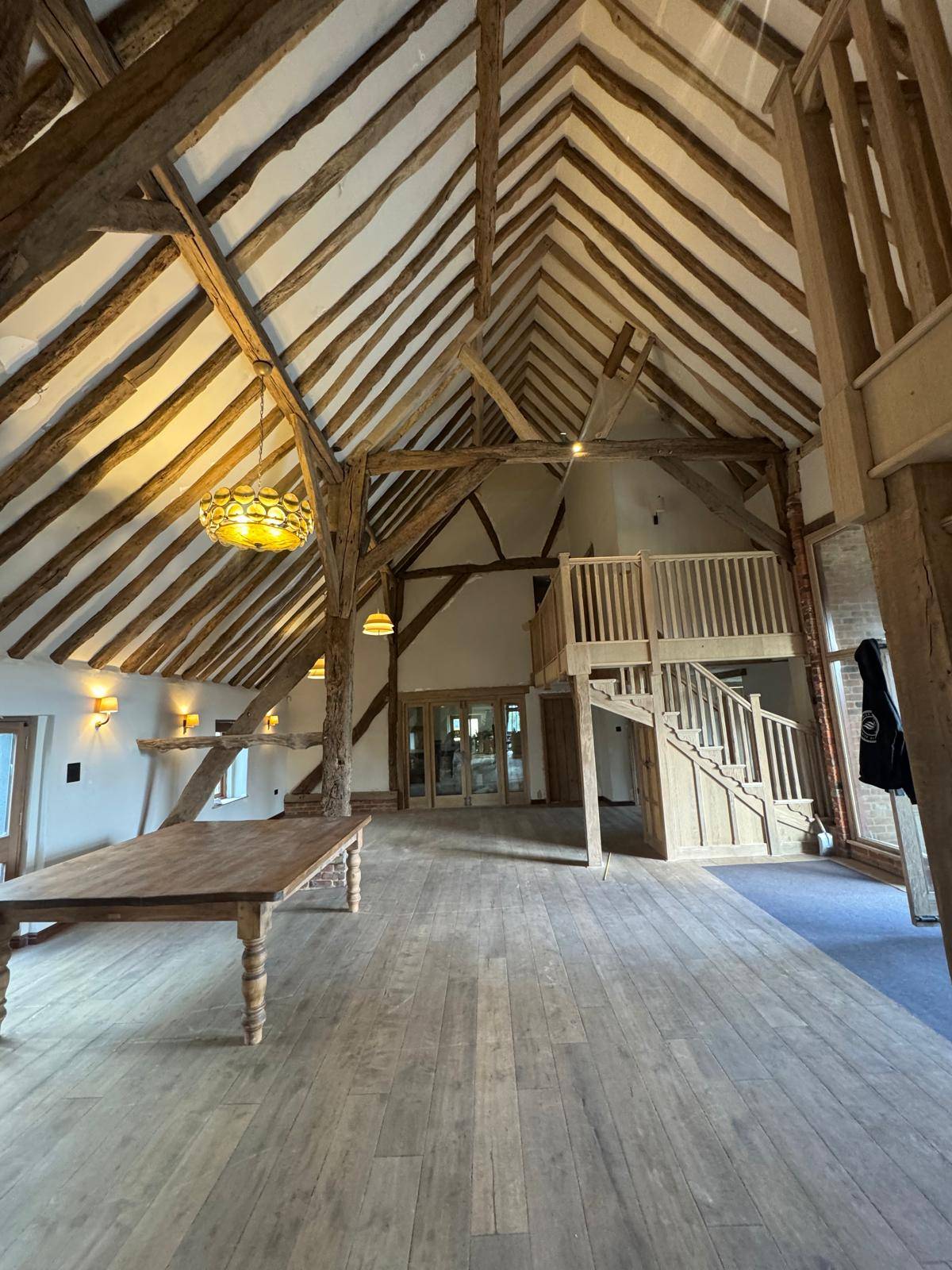
- Timber and oak beams: With controlled pressure and appropriate media, blasting can lift coatings while preserving grain detail. Too aggressive and you’ll end up with an over-textured finish that looks “shredded”.
- Steel and ferrous metalwork: Excellent for deep cleaning and prep before painting or protective coatings.
In Bristol, controlled blasting is often used to strip paint from brick façades, clean fireplaces, restore internal timber features, and prep metal railings or industrial components — but only when the surface is suitable and the pressure/media are set correctly.
Shot Blasting (and Grit Blasting)
What It Is & How It Works
Shot blasting uses metallic media — commonly steel shot or steel grit — propelled at high velocity. In many industrial setups, this is done with wheel/centrifugal systems, and the media is often recyclable. The result is powerful impact energy and fast, consistent cleaning on the right substrates.
Shot blasting is typically more aggressive than mineral blasting and is best treated as a “heavy-duty” method.
When to Use It
Shot blasting is ideal where you need:
- Heavy-duty coating removal on robust metalwork
- Consistent surface profiling to a coating specification
- Rapid removal of rust/scale from structural steel
- Preparation of industrial floors (concrete or metal) prior to coatings or overlays
Suitable Surfaces
Shot blasting is generally suited to:
- Structural steel and fabricated metalwork: beams, plates, frames, gates, heavy components
- Concrete floors: industrial or commercial prep work
- Large metal assemblies: where speed and consistency matter
Because it’s so forceful, shot blasting usually demands strong containment, proper PPE, and careful site control — especially in tighter urban settings where you’ve got neighbours, pedestrians, parked cars, and sensitive finishes nearby.
In and around Bristol, shot blasting is often the method of choice for tougher industrial and commercial prep work — including steelwork exposed to moisture and air pollutants, where coating failure and rust can progress quickly if the base metal isn’t properly cleaned and profiled.
Soda Blasting (Sodium Bicarbonate Blasting)
What It Is & How It Works
Soda blasting uses sodium bicarbonate (baking soda) propelled with compressed air. The particles are soft and friable — they break down on impact and dislodge contaminants with far less abrasion than mineral or metallic media.
That makes soda blasting one of the best options where you want removal of coatings or residues without chewing into the substrate.
When to Use It
Soda blasting is often chosen for:
- Delicate or heritage surfaces where abrasive etching is a risk
- Smoke and fire damage cleaning, including deodorising support (it can help, but it’s not magic — severe odours still need proper remediation)
- Timber restoration, where you want to lift paint/varnish without sanding away character
- Light coating removal where minimal surface profiling is preferred
Suitable Surfaces
Soda blasting is commonly used on:
- Oak beams, staircases and internal timber features
- Brick and stone where preservation of texture matters
- Fire/smoke affected interiors
- Equipment and components where you want cleaning without heavy abrasion
In Bristol, soda blasting is particularly useful for interior restoration and sensitive projects — the kind where the goal is “clean and original”, not “over-processed and new”.
Choosing the Right Method: What Actually Matters
If you’re choosing between sand/mineral blasting, shot blasting, and soda blasting, the question isn’t “which is best?” — it’s which is safest and most effective for this surface and this outcome.
Here are the main decision points.
1) Substrate Sensitivity
Not all brick is equal. Not all timber is equal. Not all stone is equal. Weathered, soft or historic materials can be damaged quickly by aggressive media or pressure. If there’s any doubt, a cautious method (or a test patch) is the sensible move.
2) Required Cleaning Intensity
Light grime or soot doesn’t need industrial force. Thick paint, multiple layers, corrosion or scale might. Match the intensity to the problem — and don’t overshoot.
3) Dust, Containment and Site Practicalities
Bristol is full of tight access areas, terraced streets, mixed-use buildings and shared spaces. Containment isn’t optional if you want a professional result. Masking, extraction, and sensible working methods protect your property — and your neighbours.
4) The Finish You Need Afterwards
If you’re re-coating, you may need a defined surface profile (shot/grit often excels here). If you’re restoring an original finish, you may prefer minimal profiling (soda or controlled mineral blasting).
5) Access and Surroundings
Interior beams, staircases, fireplaces, porches, garden walls — they all come with different constraints. The “perfect” method on paper can be the wrong method on-site if it creates mess where you can’t control it.
In Practice: Common Bristol Applications
Here’s where these methods commonly show up around Bristol and the surrounding area:
- Painted brick façades and garden walls: Often restored with controlled mineral or soda blasting to strip coatings and reveal the original brick tone — without wrecking mortar joints.
- Fireplaces and chimney breasts: Blasting can remove soot staining and old finishes, bringing brickwork back to a cleaner, natural look.
- Oak beams and internal timber features: Gentle blasting can strip varnish/paint while preserving grain and character — especially important in period homes.
- Staircases and joinery restoration: Careful removal of old coatings without rounding edges or destroying detail (something aggressive sanding often does).
- Gates, railings, and exterior metalwork: Rust and failing coatings need proper prep. If you don’t fully remove corrosion and key the surface, new paint won’t last — especially in damp conditions.
- Graffiti and staining on masonry: Blasting can be effective, but the method must be chosen to avoid “ghosting” or patchiness, particularly on porous brick.
A Powerful Tool — When It’s Used Properly
Abrasive blasting is one of the most effective tools for restoration, cleaning and surface preparation — but it’s not a one-size-fits-all fix. In Bristol, where older brick, interior timber, stone details and industrial metalwork all exist side-by-side, the best results come from matching method to material, controlling the process, and being honest about what the surface can tolerate.
Mineral-media blasting is the versatile workhorse. Shot blasting brings industrial-level force and consistent profiling. Soda blasting is the gentler option when preservation matters most.
If you want a finish that looks right and lasts, the key is simple: assess first, test if needed, then blast with control — not guesswork.
Want advice on the best method for your surface?
Send us a few photos and a rough idea of the area, and we’ll recommend the right approach for your Bristol project — including realistic timescales, dust control measures, and a clear quote.